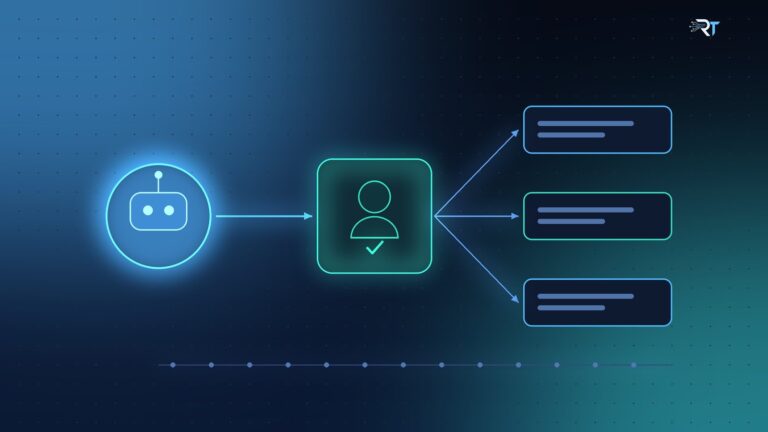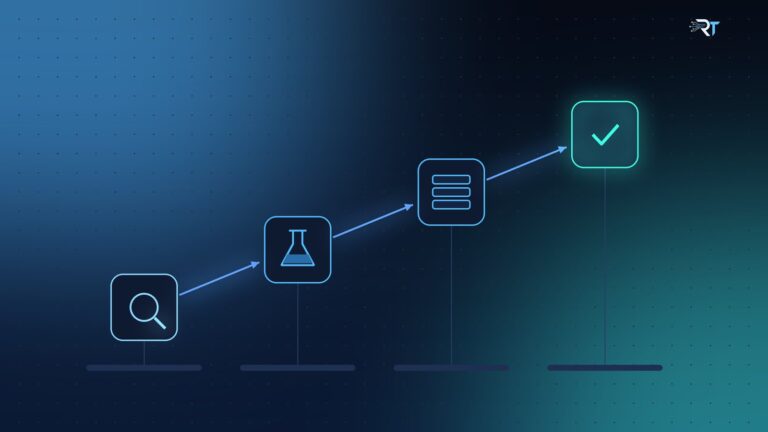
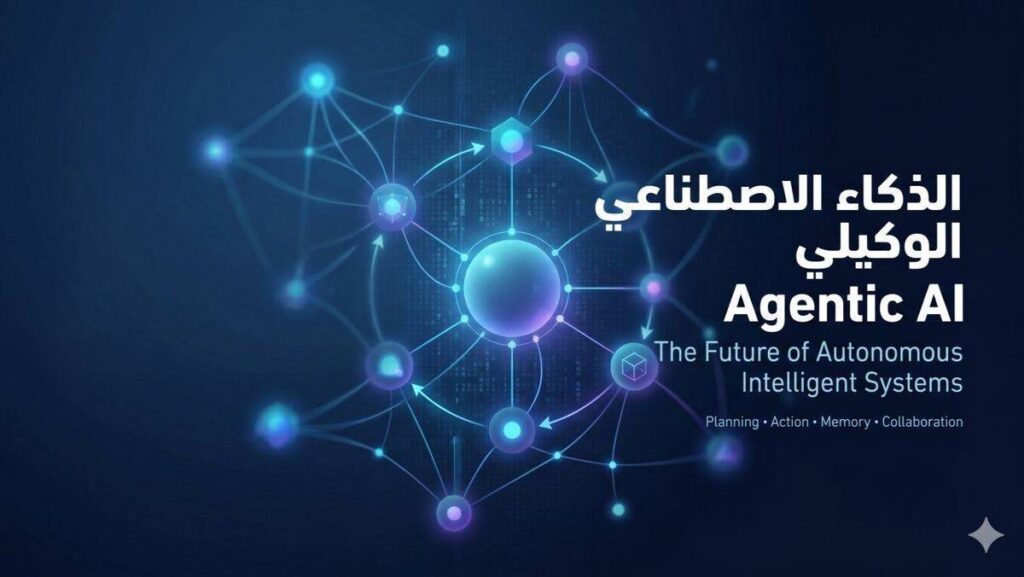
Agentic AI is one of the most widespread and influential topics across global technology platforms in 2026. This trend represents a qualitative leap that takes AI from simple generative models (such as answering questions or creating content) to autonomous systems capable of planning, executing, and self-adapting to accomplish complex tasks with minimal human intervention. According to recent reports, the use of specialized AI agents is expected to reach 40% of enterprise applications by the end of 2026, compared with less than 5% in 2025.
Defining Agentic AI and Its Core Components
The term "Agentic AI" refers to AI Agents that possess capabilities including:
- Planning: Breaking tasks down into sub-steps.
- Action: Using external tools such as databases or applications.
- Memory: Retaining context across multiple sessions.
- Collaboration: Working within Multi-Agent Systems.
These systems are distinguished by iterative loops that allow self-correction based on results, bringing them closer to "AI-Native" software.
Why It Is So Widespread in 2026
This spread is the result of technical advances in large models, along with reports from Gartner and the Stanford AI Index confirming that agents have become a strategic priority for enterprises. Updates from OpenAI, Microsoft, and Anthropic have also reinforced this trend, with a focus on multi-agent systems and business integration.
Key Agentic AI Systems
These systems fall into two main categories: closed (Proprietary) systems and Open-Source systems. Below is a detailed look, with a focus on open-source systems.
1. The Leading Open-Source Systems in 2026
Open-source frameworks are the most popular thanks to their flexibility, low cost, and community support. Here are the most prominent:
- LangGraph (part of the LangChain ecosystem): Considered the leading framework for building Stateful Agents in production environments. It relies on a Graph-Based model to manage complex flows with memory and iterative loops. It supports observability through LangSmith and is used by major companies such as Klarna and Cisco. GitHub link: https://github.com/langchain-ai/langgraph Documentation link: https://langchain-ai.github.io/langgraph/ Suited to complex applications that need full control.
- CrewAI: Focuses on building multi-agent teams based on roles (Role-Based Agents), such as "writer," "analyst," and "manager." It is the easiest for beginners and allows you to build a working prototype within a few hours. It supports integration with multiple language models and is used in business automation. GitHub link: https://github.com/crewAIInc/crewAI Website: https://www.crewai.com Ideal for rapid, collaborative prototypes.
- Microsoft AutoGen: A multi-agent framework based on natural conversations between agents, with support for automatic code execution and human interaction. Backed by Microsoft Research and suited to research and complex applications. GitHub link: https://github.com/microsoft/autogen Documentation link: https://microsoft.github.io/autogen/ Excels at advanced collaborative tasks.
- LlamaIndex (Workflows/Agents): Specializes in Data-Centric Agents with strong support for RAG (Retrieval-Augmented Generation). Ideal for applications that rely on large databases. GitHub link: https://github.com/run-llama/llama_index Integrates excellently with other frameworks.
- Dify: A visual Low-code platform for building agents without the need for deep programming, with RAG support and a graphical interface. GitHub link: https://github.com/langgenius/dify Ideal for non-technical teams.
2. A Quick Comparison of the Leading Open-Source Frameworks (2026)
| Framework | Best Use Case | Learning Curve | Stars (Approx.) | License | Enterprise Support |
|---|---|---|---|---|---|
| LangGraph | Complex stateful workflows | Medium | 24,800+ | MIT | High |
| CrewAI | Role-based agent teams | Low | 44,300+ | MIT | Medium |
| AutoGen | Multi-agent conversations | Medium | 54,600+ | Apache 2.0 | High (Microsoft) |
| Dify | Visual Low-code building | Low | 129,000+ | MIT | Medium |
| LlamaIndex | Data agents and RAG | Medium | 36,000+ | MIT | High |
(Source: 2026 analyses from Firecrawl and AIMultiple).
Practical Applications of AI Agents
- Business: Workflow automation, customer service, and data analysis (such as Salesforce Slackbot).
- Software development: Tools such as Claude Code or vLLM for writing code automatically.
- Healthcare and logistics: Coordinating multiple tasks.
- Scientific research: Multiple agents for data analysis.
Key Challenges
- Control and safety: The risk of "Hallucinations" or unexpected execution.
- Cost: Large Language Model (LLM) consumption is high.
- Privacy: With open systems, self-management is required.
- Integration: The need for unified protocols such as MCP (Model Context Protocol).
Future Outlook
By the end of 2026, agent "Headless Marketplaces" are expected to spread, where one agent automatically hires another agent. The sector will also see deeper integration with Large Action Models (LAMs) for direct interaction with interfaces.
Agentic AI represents a qualitative shift toward real, sustainable automation. Open-source frameworks such as LangGraph, CrewAI, and AutoGen provide powerful, free tools for building custom solutions. It is recommended to start with CrewAI for quick experiments, then move to LangGraph for production.
Selected Additional References
- https://www.firecrawl.dev/blog/best-open-source-agent-frameworks
- https://aimultiple.com/agentic-frameworks
- https://github.com/caramaschiHG/awesome-ai-agents-2026
Translated from the original Arabic article, first published on LinkedIn. اقرأ النسخة العربية