In past years, the prevailing model was simple: 📡 Internet of Things (IoT) devices collect data → send it to the cloud → it is analyzed using AI.
But this model has begun to change radically.
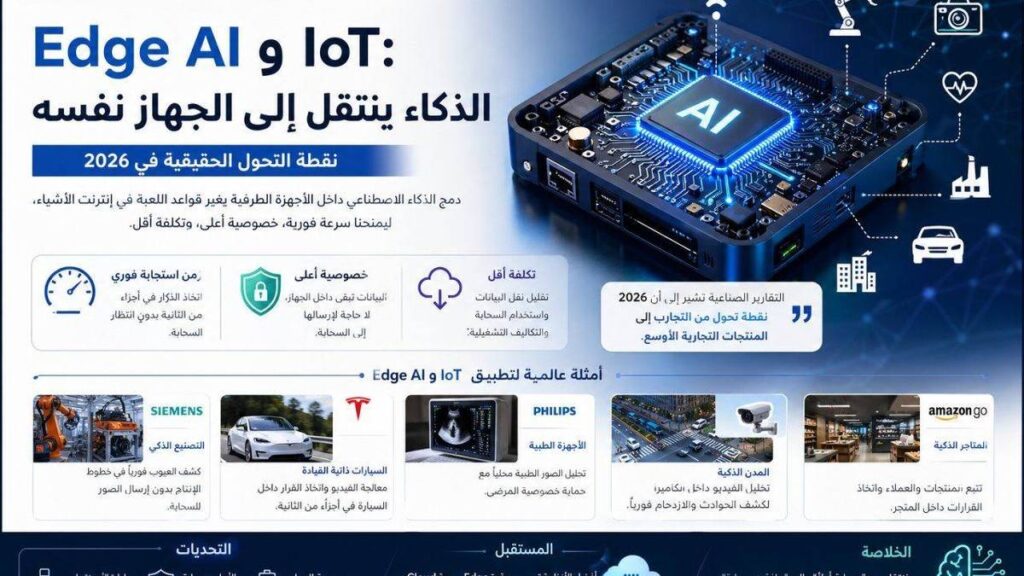
Today, we are facing a strategic shift: Intelligence is no longer only in the cloud… it now lives inside the device itself. This is what is known as Edge AI.
What Is Edge AI, Really?
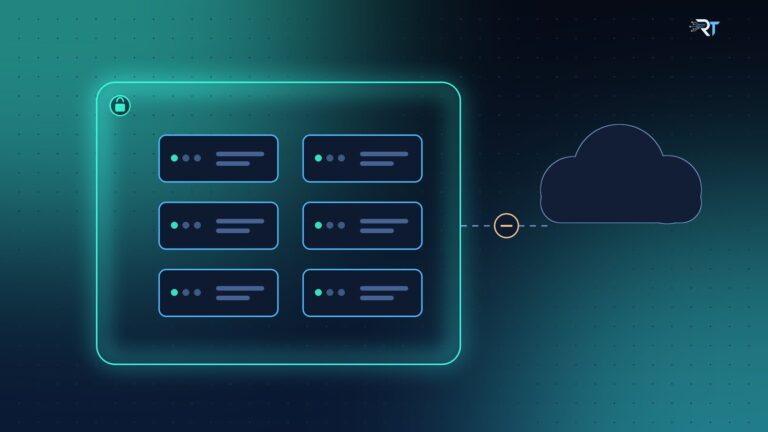
Edge AI means running AI models directly on the device (a camera, sensor, car, factory…) without needing to send data to the cloud.
Instead of:
Send everything → wait for the response
It has become:
Make the decision instantly… inside the device
Why Is This Shift Happening Now?
1) Real-Time Latency
In applications such as autonomous driving or industrial systems:
- A 1-second delay = a potential disaster
- Edge AI reduces latency to fractions of a second
2) Privacy by Design
- Data stays inside the device
- No need to send video or audio to servers
This is especially important in:
- Healthcare
- Smart cities
- Home devices
3) Cloud Costs
Running AI in the cloud is very expensive:
- Data transfer (Bandwidth)
- Storage
- Compute
Edge AI reduces: ➡️ data transfer ➡️ cloud consumption ➡️ total cost
Strong Global Examples (Real-World)
1) Smart Manufacturing — Siemens
Siemens uses Edge AI cameras on its production lines:
- Detecting defects instantly
- Without sending images to the cloud
The result:
- Fewer errors
- Faster production
- Improved quality
2) Autonomous Vehicles — Tesla
Tesla relies primarily on Edge AI:
- Processing video inside the car
- Making decisions in fractions of a second
You cannot rely on the cloud while driving. Edge AI here = a necessity, not an option
3) Medical Devices — Philips
Philips imaging and diagnostic devices:
- Analyzing images locally
- Without sending patient data
Privacy + speed = real medical value
4) Smart Cities — Smart Traffic Cameras
In several cities:
- Video is analyzed inside the camera
- Accidents or congestion are detected instantly
Instead of: 📡 streaming full video → a data center It has become: direct analysis → sending “the result only”
5) Smart Stores — Amazon Go
Amazon computer vision technologies:
- Tracking products and customers
- Instant decisions within the system
Edge AI reduces the need to stream everything to the cloud
What Changed Technically to Make This Possible?
The Evolution of AI Chips
Small devices have become capable of running AI models
Smaller, More Efficient Models
- TinyML
- Quantization
- Model compression
Running AI on:
- Cameras
- Smartwatches
- Home devices
Hybrid Architecture
The best systems today:
- Part on the Edge
- Part in the Cloud
A balance between:
- Speed
- Accuracy
- Cost
The Real Challenges
1) Device Management
- Thousands of devices = major complexity
- Updating models is difficult
2) Security
- The device has become a “smart node” → a target for attacks
3) Limited Resources
- Power
- Memory
- Processing capacity
Is 2026 Really a Turning Point?
The indicators say yes:
- A move from PoC to Production
- Massive investments in Edge chips
- Widespread adoption across industry
However: many of the reports are “analytical” rather than official announcements
We are moving from:
“Cloud-first AI”
To:
“Edge + Cloud AI”
And the difference is fundamental:
| Cloud | Edge |
|---|---|
| Powerful but slow | Fast and real-time |
| Expensive | More cost-effective |
| Less privacy | Greater privacy |
A Question for Discussion
Do you think the future will be:
- Fully Edge? Or
- Hybrid between Edge and Cloud?
Share your opinion — especially if you work in IoT or AI
Translated from the original Arabic article, first published on LinkedIn. اقرأ النسخة العربية