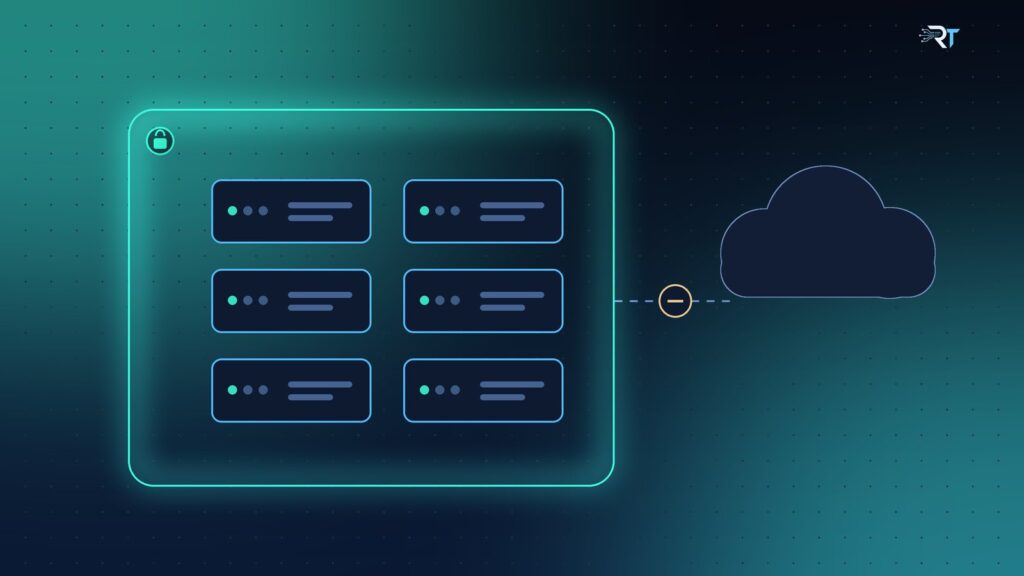
When a government entity or a company considers AI, an early question comes up: do we send our data to a cloud service, or run models inside our own network? There is no single answer for everyone, but some questions make the decision clearer.
When is on-premise the better fit?
- Data sensitivity: when data includes personal, security or financial information that policy does not allow to leave the network.
- Regulatory requirements: when regulations or contracts require data to stay in-country or inside the organisation's environment.
- Isolated environments: networks with no internet connection at all, or that must keep working when it is down.
- Full control: knowing exactly which model runs, which version, and when it changed.
Does it require expensive GPUs?
Not necessarily. Many practical use cases — answering questions from documents, classification, information extraction — can run with right-sized local models on ordinary CPUs. Heavier cases can get dedicated hardware later, when needed, instead of starting with the biggest investment.
When does the cloud make sense?
When data is not sensitive, when the use case needs the capabilities of very large models, or when the organisation wants to start quickly without managing infrastructure. Many organisations choose a hybrid approach: sensitive data is processed internally and general tasks in the cloud, under a clear policy on what may leave.
Arabic first, either way
Wherever it runs, what matters is that the system understands questions in Arabic, reads Arabic documents accurately — including scanned ones — and answers with its source. That should be tested on the organisation's own data before deciding.
How to start
Classify your data by sensitivity, pick a single use case, then test the most suitable deployment option for it in a short proof of concept. A decision based on a real trial beats one based on assumptions.